
Have you ever stopped to think about what role your computer mouse plays when you’re working or gaming? Is it just a simple tool, or does it do more than you realize?
Understanding whether the mouse is an input or output device can change how you see your interaction with technology. You’ll discover the true function of the mouse and why it matters for your everyday computer use. Keep reading—what you learn might surprise you and make your tech experience smoother than ever.
Mouse Functions
The mouse plays a vital role in how you interact with your computer every day. Understanding its functions gives you a clearer picture of why it is considered an input device. It’s more than just a tool to move the cursor; it sends precise signals that control your actions on the screen.
How The Mouse Sends Data
Each movement you make with the mouse is converted into electrical signals. These signals are sent to the computer through a wired or wireless connection.
Inside the mouse, sensors track motion and button presses. Optical mice use light sensors to detect movement on a surface, while older models use a rolling ball. This data is then translated into coordinates that the computer understands.
Think about how quickly and accurately your cursor moves when you slide the mouse. That’s the mouse sending continuous data to keep up with your hand’s motion.
Interaction With The Computer
The computer treats the mouse as an input device because it receives information from it to perform tasks. When you click a button, the mouse sends a signal telling the computer to open a file, select text, or execute commands.
This interaction allows you to control the graphical user interface without typing commands. Your mouse clicks, double clicks, and scrolls directly influence what happens on the screen.
Have you noticed how different applications respond uniquely to mouse input? This shows how the mouse works closely with software to provide you with a seamless experience.
Credit: goglobalways.com
Input Device Characteristics
Input devices play a vital role in how users interact with computers. They allow users to send data and commands into the system. Understanding the characteristics of input devices helps clarify their function. Input devices capture information from the user and convert it into signals the computer can process.
Defining Input Devices
An input device is any hardware used to provide data to a computer. These devices let users enter text, commands, images, and sounds. The computer then processes this data to perform tasks or display results. Input devices do not produce output themselves; they simply send information to the computer.
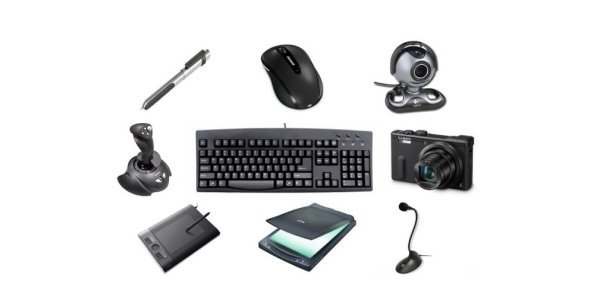
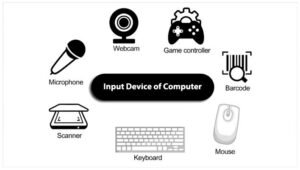
Examples Of Input Devices
- Keyboard – Used to type letters, numbers, and symbols.
- Mouse – Allows users to point, click, and drag items on the screen.
- Scanner – Converts physical documents into digital images.
- Microphone – Captures sound for recording or voice commands.
- Touchscreen – Detects finger taps and gestures as input.
Output Device Features
Understanding output device features is crucial for anyone interested in technology. Output devices display or present data, transforming digital information into a human-perceivable form. These devices are vital in bridging the gap between computers and users, providing visual, auditory, or physical feedback. Let’s dive deeper into the specifics of these devices.
Traits Of Output Devices
Output devices share common traits that define their functionality. They convert data into a readable format. They also provide feedback to users through various methods. This can include visual signals on screens or sounds from speakers.
Another key trait is the accuracy of information presented. Output devices must display data correctly and promptly. They also need compatibility with different systems and software. Finally, they should be user-friendly and easy to operate.
Common Output Devices
Several devices fall under the output category. Monitors are perhaps the most recognized. They display visual data from computers, including text, images, and videos.
Printers are another example. They provide hard copies of digital documents and images. Speakers and headphones are output devices that deliver sound. They allow users to hear music, voice, and other audio content.
Projectors are used in presentations. They enlarge computer display onto a larger screen or surface. These devices play significant roles in everyday technology use. They enhance the user’s experience and interaction with digital data.

Credit: www.youtube.com
Mouse As An Input Device
The mouse is a primary input device for computers. It allows users to interact with the system by moving a pointer on the screen. This simple tool translates physical movement into digital commands. It plays a vital role in navigation and control within the user interface.
Movement Detection
The mouse detects movement using sensors under its body. These sensors track the direction and speed of hand motions. Optical and laser technologies capture this movement accurately. The computer then moves the cursor accordingly on the screen. This smooth control helps users click and drag items with ease.
Button Clicks And Commands
The mouse has buttons that perform different functions. Pressing these buttons sends signals to the computer. These signals execute commands like selecting, opening, or dragging files. Many mice include extra buttons for shortcuts or special actions. This makes tasks faster and more efficient for users.
Can The Mouse Be An Output Device?
The mouse is widely known as an input device. It sends commands to the computer by moving the pointer or clicking buttons. But can the mouse also work as an output device? The answer lies in understanding how the mouse interacts with the user and computer.
Feedback Mechanisms
Some mice provide feedback to the user. This feedback helps confirm actions or improve control. Common feedback includes:
- Vibration or haptic feedback when clicking
- Visual signals such as LED lights
- Audible clicks from buttons
These signals give users information from the computer through the mouse. It shows the mouse can send simple output to the user.
Limitations In Output
The mouse cannot display images or text. It lacks a screen or speakers. Its feedback is limited to small vibrations or lights. Compared to monitors or speakers, the mouse’s output is very basic.
The primary role remains input. Any output is only to improve user control and experience. It cannot replace other output devices like monitors or printers.
Hybrid Devices And Mouse
Hybrid devices blur the line between input and output functions, making it tricky to classify some gadgets strictly as one or the other. The mouse is traditionally seen as an input device, but exploring hybrid technology reveals some interesting possibilities. Understanding whether a mouse can ever serve dual roles helps you appreciate the evolving nature of computer peripherals.
Devices With Dual Functions
Some devices combine input and output capabilities to enhance user interaction. Touchscreens, for example, let you input commands by touch while displaying visual feedback simultaneously. Another example is smart pens that write on paper but also transfer notes digitally, acting as both input and output tools.
These dual-function devices change how you interact with technology, making tasks smoother and more intuitive. They often reduce the need for multiple gadgets, saving space and simplifying your setup.
Is The Mouse Ever Hybrid?
Typically, a mouse sends signals to your computer based on movement and clicks, clearly marking it as an input device. However, some advanced mice add output features such as LED lights or small displays that provide information like DPI settings or battery life.
While these features add a layer of output, the core function of a mouse remains input. Do you think these additions qualify a mouse as a hybrid device, or are they just enhancements?
Consider gaming mice with customizable lighting that responds to in-game events. They output visual cues, but their main role is still to control the cursor and execute commands. This shows how a mouse can incorporate minor output elements without fully becoming a hybrid device.
Impact On User Experience
The impact of a mouse on user experience is more significant than many realize. It goes beyond simply moving a cursor on the screen; it directly affects how smoothly and efficiently you interact with your device. Whether you’re browsing, working, or gaming, the mouse’s responsiveness and precision can change everything.
How Mouse Input Shapes Interaction
Your mouse acts as a bridge between you and the digital world. Precise movements allow you to select text, drag files, and navigate menus without frustration. Have you ever struggled with a laggy or unresponsive mouse? It instantly makes tasks feel slow and tedious.
The design of the mouse—its size, button layout, and sensitivity settings—also plays a huge role. A well-designed mouse fits comfortably in your hand and reduces strain during long use. This can improve your focus and reduce fatigue, letting you work or play longer without discomfort.
Role In Gaming And Design
In gaming, the mouse is a tool of precision and speed. Competitive players rely on quick, accurate clicks to outmaneuver opponents. Even a slight delay or inaccuracy can cost a game, showing how critical the mouse is to performance.
For designers, the mouse is just as vital. It allows for detailed work in graphic and 3D design software. When you use a mouse that tracks smoothly, your creative process flows better, and the quality of your work improves.
- Fast response times help you execute complex commands quickly.
- Adjustable DPI settings let you control cursor speed for different tasks.
- Extra buttons can be programmed for shortcuts, saving time.
Think about your own experience: How often do you change or upgrade your mouse to improve your workflow or gaming? That choice directly impacts how effectively you interact with your computer every day.
Credit: goglobalways.com
Frequently Asked Questions
Is A Mouse Classified As An Input Device?
Yes, a mouse is an input device. It allows users to interact with the computer by moving the pointer and clicking.
How Does A Mouse Function As An Input Device?
A mouse detects physical movement and translates it into cursor movement on the screen. It sends signals to the computer for actions.
Can A Mouse Be Used As An Output Device?
No, a mouse cannot be used as an output device. It only sends information to the computer, not display data.
Why Is A Mouse Essential For Computer Input?
A mouse simplifies navigation and selection tasks. It provides precise control and faster interaction compared to keyboard-only input.
Conclusion
The mouse is mainly an input device. It helps users control the computer. By moving and clicking, it sends commands to the system. It does not display or output information. Understanding this helps in learning computer basics. The mouse plays a key role in navigation.
It connects the user and the computer smoothly. Simple, yet important for everyday tasks.