
Have you ever wondered what makes a DSLR camera capture such sharp, vibrant photos? If you’re curious about how your camera turns a simple moment into a stunning image, you’re in the right place.
Understanding how a DSLR works will not only boost your confidence but also help you take better pictures every time you click. Let’s dive into the magic behind your camera’s lens and discover how it brings your memories to life.
Dslr Basics
Understanding DSLR basics helps you grasp how this camera captures stunning photos. A DSLR combines optical technology with digital sensors. It uses light, mirrors, and lenses to create clear images. Knowing how each part works makes photography easier and more fun.
Core Components
A DSLR has several key parts that work together:
- Lens:Focuses light onto the sensor.
- Image Sensor:Captures the light and turns it into a digital image.
- Shutter:Controls how long light hits the sensor.
- Mirror:Reflects light up into the viewfinder.
- Viewfinder:Lets you see the scene before taking a photo.
Mirror Mechanism
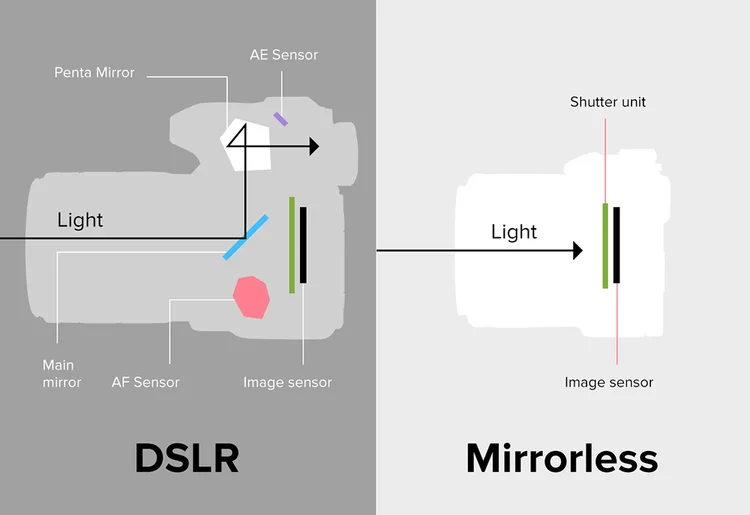
The mirror plays a crucial role inside a DSLR. It sits at a 45-degree angle behind the lens. When you look through the viewfinder, the mirror reflects light up to the prism. This prism then directs the light to your eye.
When you press the shutter button, the mirror flips up. This movement allows light to reach the sensor directly. After the shot, the mirror returns to its original position. This mechanism helps you see the exact image before capturing it.
Viewfinder Role
The viewfinder shows you the real scene through the lens. It uses a system of mirrors and prisms to deliver a clear, bright image. This optical view helps you frame your shot with precision.
Unlike digital screens, the viewfinder provides no delay or lag. This feature makes it easier to track moving subjects. It also helps conserve battery life by not relying on the LCD screen.

Credit: en.wikipedia.org
Light Path Inside Dslr
Understanding the light path inside a DSLR camera can change how you use it. Light travels a specific route that affects the final image you capture. Knowing this path helps you grasp why your camera behaves the way it does, especially when focusing or composing a shot.
From Lens To Sensor
The journey starts at the lens, which gathers and focuses light. The lens controls how much light enters, using the aperture, a small adjustable opening. After passing through the aperture, light moves deeper into the camera body toward the sensor, which records the image.
The sensor is the heart of your DSLR, converting light into the digital image you see. Have you noticed how changing your lens affects image brightness and sharpness? That’s because different lenses control the light path in unique ways.
Reflex Mirror Function
A key feature of DSLRs is the reflex mirror, positioned at a 45-degree angle inside the camera. This mirror reflects light coming through the lens upward, directing it toward the viewfinder instead of the sensor.
When you press the shutter button, the mirror quickly flips up out of the way, allowing light to hit the sensor directly. This flip happens so fast that you barely notice it, but it’s essential for letting you preview the exact scene before capturing it.
Pentaprism Purpose
After the reflex mirror reflects light upward, it enters the pentaprism, a small five-sided glass prism. The pentaprism’s job is to flip and correct the image so you see it right-side-up and properly oriented in the viewfinder.
Without this correction, your viewfinder image would appear upside down or reversed. This optical trick ensures you frame your shots accurately, making the DSLR feel intuitive to use—even if you’re new to photography.
Image Capture Process
The image capture process in a DSLR camera is where all the magic happens. It turns the scene you see through the viewfinder into a digital photo stored on your memory card. Understanding this process helps you control your camera better and get the shots you want.
Shutter Operation
The shutter acts like a curtain inside your camera. When you press the shutter button, this curtain quickly opens and closes to let light hit the sensor. The speed of this action, called shutter speed, controls how much light enters and how motion is captured.
Think about photographing a moving car. A fast shutter speed freezes the motion sharply, while a slower speed might blur the movement, creating a sense of speed. Controlling the shutter is your first step in shaping the final image.
Sensor Exposure
Behind the shutter lies the camera’s sensor, which captures the light and converts it into an electronic signal. This sensor is made up of millions of tiny pixels, each measuring the brightness and color of the light hitting it.
The longer the sensor is exposed to light, the brighter the image becomes. But too much light can overexpose your photo, washing out details. Balancing sensor exposure is key to capturing images with perfect brightness and detail.
Image Processing
Once the sensor collects the light data, the camera’s processor takes over. It converts the raw signals into a usable image file, adjusting color, sharpness, and noise reduction along the way.
This step happens in a fraction of a second but greatly influences the quality of your photo. Your camera’s processing power and settings like JPEG or RAW format affect how much control you have over the final image.
Credit: fantasiummedia.com
Autofocus System
A DSLR camera’s autofocus system helps capture sharp images. It automatically adjusts focus to ensure clarity. Understanding autofocus is key to mastering photography. Let’s explore how DSLR cameras achieve precise focus.
Phase Detection
Phase detection is fast and effective in DSLRs. It uses a special sensor to measure light patterns. The camera splits incoming light into two images. These images are compared to find differences. The lens then adjusts to align them, achieving sharp focus. This method is great for capturing moving subjects.
Contrast Detection
Contrast detection works differently. It measures sharpness by analyzing contrast levels. The camera evaluates the image’s edges and details. It moves the lens back and forth to find the best focus point. This method is slower than phase detection. It excels in low-light conditions, enhancing detail.
Focus Points
Focus points are crucial for accurate focusing. DSLRs offer multiple focus points across the frame. Users can select specific points for detailed focus. This allows flexibility in composition. More focus points mean more control over the image. Choosing the right focus point ensures desired clarity in your shots.
Lens Interactions
The lens of a DSLR camera plays a vital role in capturing sharp, clear images. It controls how light enters the camera and hits the sensor. The interaction between the lens and the camera body shapes the final photo’s quality and style. Understanding these lens interactions helps users get the best results from their DSLR.
Aperture Control
The aperture is a small opening inside the lens. It controls how much light reaches the camera sensor. A wider aperture lets in more light, which is useful in dark places. A smaller aperture reduces light but increases the depth of field. This means more of the image stays in focus. Aperture size also affects the photo’s background blur, called bokeh. Adjusting the aperture helps photographers balance brightness and focus.
Focal Length Impact
Focal length is the distance between the lens and the camera sensor. It affects the angle of view and how close objects appear. Short focal lengths show a wide view, great for landscapes. Long focal lengths zoom in on far objects, ideal for wildlife or sports. Changing focal length also changes image perspective. Photographers choose lenses based on the type of shots they want.
Lens Mount Types
The lens mount connects the lens to the DSLR body. Different camera brands use different mount types. This affects lens compatibility. Using the correct mount ensures secure attachment and proper communication between lens and camera. Some mounts allow autofocus and image stabilization features. Knowing your camera’s mount type helps select the right lenses for your gear.

Credit: visualeducation.com
Settings And Controls
Understanding your DSLR camera’s settings and controls is key to capturing the exact image you want. These settings let you control how light interacts with your camera’s sensor, shaping the mood and clarity of your photos. Mastering them lets you move beyond automatic modes and take full creative control.
Iso Sensitivity
ISO determines how sensitive your camera’s sensor is to light. Lower ISO values like 100 or 200 keep images sharp and free of noise, perfect for bright conditions. Higher ISO settings make the sensor more sensitive, useful in low light but can introduce graininess.
Have you ever noticed how photos taken indoors without flash sometimes look grainy? That’s ISO at work. Adjusting ISO lets you balance brightness and image quality depending on your environment.
Shutter Speed
Shutter speed controls how long your camera’s shutter stays open, affecting motion capture. Fast shutter speeds (like 1/1000 second) freeze movement, ideal for sports or wildlife photography. Slow speeds (like 1/30 second) blur motion, which can create artistic effects or capture light trails.
Think about a waterfall photo you’ve seen with smooth, silky water—this effect comes from a slow shutter speed. But be careful; using slow speeds without a tripod can cause unwanted blur in your entire image.
Aperture Settings
Aperture refers to the size of the lens opening that lets light hit the sensor. It’s measured in f-stops, such as f/2.8 or f/16. A wide aperture (small f-number) lets in more light and creates a blurry background, great for portraits.
A small aperture (large f-number) lets in less light but keeps more of the scene in focus, which works well for landscapes. Have you tried adjusting your aperture to isolate your subject against a dreamy background? It’s a simple way to make your photos stand out.
Advantages Over Other Cameras
Understanding the advantages of a DSLR camera over other types can help you decide if it’s the right tool for your photography needs. DSLRs offer distinct benefits that often make a noticeable difference in your shooting experience and final images. Let’s look closely at what sets them apart.
Image Quality
DSLRs typically feature larger image sensors than compact cameras and smartphones. This larger sensor captures more light and detail, resulting in sharper, clearer photos even in low light conditions.
Have you noticed how your phone struggles with night shots? A DSLR handles those scenes much better, giving you richer colors and less noise.
This means your photos will look professional without needing extensive editing.
Speed And Precision
DSLRs are designed to react quickly to your commands. The autofocus systems are faster and more accurate than those in most other cameras.
Think about capturing a fast-moving subject like a child running or a bird in flight. A DSLR increases your chances of getting a sharp shot without blur.
Plus, the optical viewfinder offers a real-time, lag-free view, helping you frame your shot precisely before pressing the shutter.
Manual Control
With a DSLR, you get full control over settings like aperture, shutter speed, and ISO. This lets you experiment and adjust based on the scene.
Have you ever wanted to freeze motion or create a background blur but didn’t know how? A DSLR puts that power in your hands.
This flexibility helps you grow as a photographer by learning how each setting affects your image.
Frequently Asked Questions
How Does A Dslr Camera Capture Images?
A DSLR camera captures images by using a mirror to reflect light into an optical viewfinder. When you press the shutter, the mirror flips up, allowing light to hit the image sensor, which records the photo digitally.
What Role Does The Mirror Play In A Dslr?
The mirror in a DSLR reflects light from the lens to the optical viewfinder. This lets you see exactly what the lens sees. When you take a photo, the mirror flips up to expose the sensor to light.
How Does The Image Sensor Work In A Dslr?
The image sensor converts light into electrical signals. It captures the image when the shutter opens. The sensor’s quality affects the photo’s resolution and detail.
Why Is The Shutter Important In Dslr Cameras?
The shutter controls how long light hits the sensor. It opens to let light in and closes to stop exposure. Shutter speed affects motion blur and image brightness.
Conclusion
A DSLR camera captures light through a lens to create photos. The mirror inside reflects the image to the viewfinder. When you press the shutter, the mirror moves, and light hits the sensor. This process makes clear and sharp pictures.
Understanding these steps helps you use your camera better. Practice will improve your skills over time. Photography becomes more fun with knowledge and patience. Keep exploring and enjoy capturing your world.