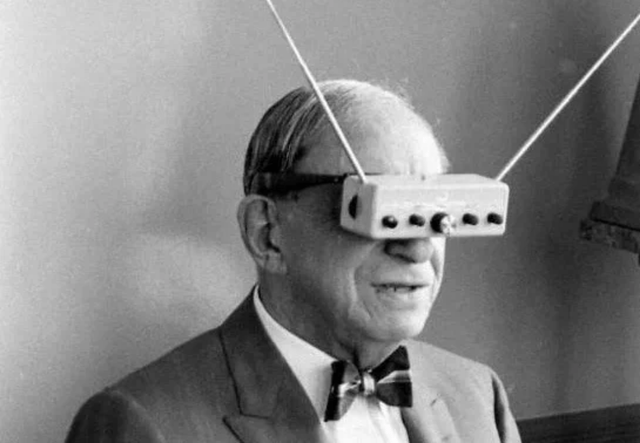
Have you ever wondered where virtual reality all began? What was the very first VR headset that started it all?
If you’re curious about how this technology evolved and what made those early devices special, you’re in the right place. Understanding the origins of VR can change the way you see today’s immersive experiences. Keep reading, and you’ll discover surprising facts that might just change your view on virtual reality forever.
Early Concepts Of Virtual Reality
Virtual reality (VR) is not a new idea. Its roots trace back many decades. The journey began with early concepts that imagined how humans could enter and explore artificial worlds. These ideas laid the foundation for the first VR headsets. Understanding these early thoughts helps us see how far VR technology has come.
Pioneering Ideas And Theories
The concept of VR started as a blend of art and science. Early thinkers dreamed of immersive experiences beyond normal sight. They imagined devices that could trick the brain into seeing new realities.
One key idea was creating a 3D world that users could interact with. This involved combining visuals, sound, and sometimes touch. The goal was to make the experience feel real.
These early theories inspired many experiments. Some focused on creating special glasses or helmets. Others explored using mechanical systems to track head movement.
Influential Scientists And Inventors
Several pioneers shaped VR’s early development. They worked in different fields like engineering, psychology, and computer science.
- Morton Heilig:He built the Sensorama in the 1950s. It was a machine that combined 3D visuals, sound, and smells.
- Ivan Sutherland:Known as the father of computer graphics. In 1968, he created the first head-mounted display (HMD) called the Sword of Damocles.
- Michael Noll:Worked on early computer-generated 3D images. His work helped shape VR graphics.
These innovators helped move VR from theory to practical devices. Their work set the stage for the first true VR headsets.

Credit: www.ign.com
The First Vr Headset Models
The journey into virtual reality began with some groundbreaking headset models that paved the way for today’s immersive experiences. These early devices weren’t just tech experiments; they laid the foundation for what VR could become. Understanding these first VR headset models helps you appreciate how far the technology has come and what challenges were overcome along the way.
The Sensorama Experience
The Sensorama, created in the 1960s, wasn’t a headset in the modern sense but an early attempt to deliver immersive experiences. It combined visuals, sound, vibrations, and even smells to engage multiple senses simultaneously. Imagine sitting in a chair that could simulate a motorcycle ride through the city, complete with wind and engine sounds—that’s what the Sensorama aimed to do.
Although you didn’t wear it on your head like today’s VR gear, the Sensorama’s multi-sensory approach was revolutionary. It showed that VR isn’t just about visuals but about creating a convincing environment for your brain. Have you ever thought about how adding smell and touch could change your experience in VR?
The Sword Of Damocles
The first true VR headset, known as the Sword of Damocles, was developed in the late 1960s by Ivan Sutherland. It earned its name because it was so heavy and bulky it had to be suspended from the ceiling, hanging over the user’s head like a sword. This device was primitive by today’s standards but introduced the concept of head-tracking and stereoscopic 3D visuals.
Wearing the Sword of Damocles was nothing like slipping on a lightweight headset today. You had to be stationary, and the resolution was low, yet it marked a huge leap forward. It makes you wonder: how did early users feel experiencing 3D visuals that responded to their head movement for the first time?
Technology Behind The First Headsets
The technology behind the first VR headsets was a mix of innovation and limitations. These early devices laid the groundwork for the immersive experiences we enjoy today. Understanding their core technology helps you appreciate how far VR has come and the hurdles that had to be overcome.
Display And Tracking Systems
The first VR headsets used basic display technology compared to modern standards. They typically featured small CRT screens or simple LCD panels placed close to the eyes to create a sense of depth. The resolution was low, often resulting in a pixelated view, but it was enough to start creating immersive visuals.
Tracking systems were mechanical or magnetic. Early devices tracked head movements using sensors attached to the headset or external tracking units. These systems could detect rotation but struggled with precise positional tracking, which limited the sense of presence.
- Displays were bulky and low resolution
- Tracking focused mainly on head rotation
- Limited field of view compared to modern VR
Challenges And Limitations
One major challenge was latency. The delay between head movement and display update caused motion sickness for many users. This problem still exists but has improved significantly with faster processors and better sensors.
The weight and comfort of the headset were also issues. Early models were heavy and awkward, making long sessions uncomfortable. If you’ve ever tried on a vintage headset, you’d know it feels like carrying a small TV on your face!
Another limitation was the lack of content. Without engaging software, the technology couldn’t shine on its own. This shows how critical both hardware and software are for a successful VR experience.
Impact On Modern Vr Development
The first VR headset laid the foundation for modern virtual reality technology. It showed what was possible and sparked curiosity across many fields. Early VR devices gave engineers and designers a base to improve user experience and technology. The impact of these early headsets still shapes how VR grows today.
Advancements Inspired By Early Devices
Early VR headsets introduced key ideas like head tracking and stereoscopic displays. These ideas helped developers focus on making VR more immersive and responsive. Engineers worked to reduce lag and improve image clarity based on these early designs. Many concepts from the first headsets became standard features in modern devices.
Developers also learned about user comfort and interaction limits. This knowledge guided the creation of lighter, more ergonomic headsets. Early failures pushed innovation in fields like motion sensors and display technology. The journey from bulky prototypes to sleek modern VR started here.
Legacy In Today’s Vr Industry
The first VR headset left a strong legacy in the technology world. It inspired companies to invest in VR research and product development. Today’s VR industry owes much to those first experiments and ideas. The headset showed VR’s potential beyond just entertainment.
Modern VR devices build on this legacy by offering better graphics, tracking, and software. Virtual reality is now used in education, medicine, training, and design. The early VR headset helped create a new path for technology and creativity worldwide.
Key Figures In Vr History
Virtual reality has come a long way. Key figures in VR history have shaped this journey. Their innovations have paved the path for modern VR technology.
Ivan Sutherland’s Contributions
Ivan Sutherland is known as the father of computer graphics. He created the first VR headset. It was called the “Sword of Damocles.” This device was bulky and hung from the ceiling. It displayed simple wireframe images. Sutherland’s work laid the foundation for VR development. His vision inspired many future VR pioneers.
Morton Heilig’s Innovations
Morton Heilig was a pioneer in immersive experiences. He developed the Sensorama in the 1960s. It was a machine that simulated various senses. It included sight, sound, and smell. The Sensorama aimed to immerse users in a virtual world. Heilig’s work was crucial for the progress of VR technology. It showed that VR could engage multiple senses. His ideas were ahead of his time.
Credit: medium.com

Credit: www.researchgate.net
Frequently Asked Questions
What Was The First Vr Headset Called?
The first VR headset was the Sword of Damocles, created in 1968 by Ivan Sutherland. It was a bulky, head-mounted display connected to a computer.
Who Invented The First Vr Headset?
Ivan Sutherland, a computer scientist, invented the first VR headset in 1968. His work laid the foundation for modern virtual reality technology.
How Did The First Vr Headset Work?
The Sword of Damocles used simple graphics and sensors to track head movements. It displayed basic 3D wireframe images in front of the user’s eyes.
When Was The First Vr Headset Developed?
The first VR headset was developed in 1968. This invention marked the beginning of immersive virtual reality experiences.
Conclusion
The first VR headset marked a big step in tech history. It showed how virtual worlds could feel real. Since then, VR has grown a lot. People use it for games, work, and learning. The early designs inspired many new ideas.
Today’s VR is easier and more fun. Remembering the first headset helps us see how far VR has come. The future holds even more exciting chances for this technology. Keep an eye on VR—it’s just getting started.